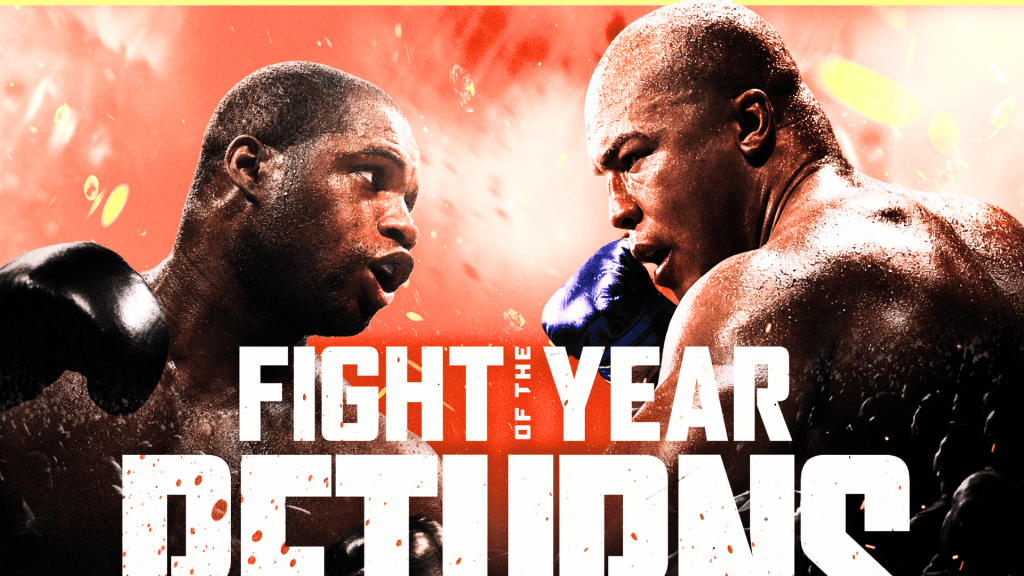
The heavyweight brawl between veterans Derek Chisora and Deontay Wilder was a fitting send-off. Chaotic, violent, and impossible to ignore – much like Chisora’s career.
He may never have held a world title, but few have left a deeper imprint on British boxing.
Technique was largely abandoned as both men swung with bad intentions for 12 relentless rounds. The crowd inside the O2 loved every second. Wilder deserved the decision, but it was the respect shown afterward that lingered. A reminder that even in its rawest form, boxing still finds space for dignity.
At ringside were promoter Kalle Sauerland, YouTuber-boxer KSI, promoter Eddie Hearn, and former heavyweight champion Anthony Joshua. The latter watched as a fan and Chisora supporter, but perhaps also as something else, because after Wilder (45-4-1, 43 KOs) left the ring, the past was brought into the present. Somehow, despite it being on the shelf for years, Joshua vs Wilder is relevant again. Should it be? After all this time?
Wilder’s message
The failure to make this fight when it mattered remains one of boxing’s great modern frustrations. Two of the biggest names of their era, endlessly linked, never delivered. And yet, all it took was three words.
Wilder, fresh from victory, headed backstage, passed Joshua, and reignited a conversation that should have been buried years ago.
“Let’s do it.”
Joshua is 36, 13 years into his career. Wilder is 40, with even more miles behind him. Both are well beyond their peak. Still, the interest is there – because in heavyweight boxing, logic rarely leads the conversation.
Eight years ago, after beating Joseph Parker, Joshua had his own message for Wilder:
“Let’s go.”
He spoke of the UK leading the sport and making the biggest fights happen. Offers reportedly climbed into eight figures. Wilder countered. Talks stalled. Nothing materialised.
Then everything changed.
Joshua was stunned by Andy Ruiz Jr.. Wilder was drawn into a brutal trilogy with Tyson Fury. By 2020, the moment had passed. The belts were gone. The timing, ruined.
And yet here we are.
Joshua (29-4, 26 KOs) is now rebuilding after personal trauma, both physical and mental. Wilder, as ever, believes. That much has never changed.
Will they? Won’t they?
Could they still fight in 2026? Yes. Will they? Who knows. At this point, that almost doesn’t matter. Because it would sell. Boxing never hides from what it fundamentally is.
The heavyweight division exists on different terms. One punch changes everything. Age, form, momentum, none of it carries quite the same weight when 18-stone men are throwing with intent.
Right now, Oleksandr Usyk sits alone at the top. Moses Itauma is the man who could be king. Fabio Wardley continues to defy expectations, while Agit Kabayel, Daniel Dubois, and Filip Hrgović remain in the mix.
That’s the present.
Joshua and Wilder belong to the past.
But in boxing, the past has a habit of resurfacing. And it becomes larger than life when money is involved.
Joshua’s recent win, which saw him break Jake Paul’s jaw, keeps him relevant. Wilder, for now, has dragged his name back from the brink. Against the division’s elite, both would be underdogs.
But against each other? That’s different.
Joshua vs Wilder is no longer about legacy. It’s not about titles, or timing, or who the better fighter. It’s about curiosity. About violence. About the simple, irresistible appeal of two heavyweights with power trying to take each other out.
We know it’s too late. We know we missed the moment. But we also know this: if it gets made, we’ll watch. And that’s why, against all logic, Joshua vs Wilder is alive again.
More Fighters Weekly News
- Garcia Stops Dolan in Three on Sky Sports’ Return to Boxing
- Ex-UFC star Darren Till leaves Misfits Boxing ahead of “massive” announcement
- Deontay Wilder defeats Derek Chisora after a split decision street fight
- Pat Brown passes Ducar test – but warning signs remain
Follow Fighters Weekly on Instagram, Facebook, and X.